The cement manufacturing industry has experienced remarkable technological advancements over the past few decades, especially in grinding equipment. As energy costs continue to rise and environmental regulations become stricter, manufacturers are searching for equipment that delivers higher productivity while reducing operational expenses. Two of the most widely used grinding technologies are the Ball Mill and the Vertical Roller Mill. Both systems have proven their value in cement production, but each offers unique advantages depending on the specific needs of a manufacturing plant.
Choosing between a Ball Mill and a Vertical Roller Mill is not simply a matter of selecting newer or older technology. The right decision depends on production capacity, energy efficiency, maintenance requirements, product quality, and long-term operating costs. Companies like Cementl continue to emphasize the importance of selecting grinding solutions that align with modern production goals while supporting sustainable and profitable cement manufacturing.
Understanding the Ball Mill
The Ball Mill has been a trusted solution in the cement industry for decades. It operates by rotating a cylindrical drum filled with steel balls that crush and grind clinker into fine cement powder. Thanks to its simple design and reliable performance, the Ball Mill remains a preferred option for many cement manufacturers around the world.
One of the biggest strengths of a Ball Mill is its flexibility. It can process a wide range of raw materials and clinker types while producing consistent cement quality. Maintenance procedures are well understood, replacement parts are widely available, and experienced technicians can easily operate and service the equipment.
Although the Ball Mill has a proven track record, it generally consumes more electrical energy than newer grinding technologies. For manufacturers focused on lowering operating costs and improving sustainability, energy consumption has become an increasingly important consideration.
How a Vertical Roller Mill Works
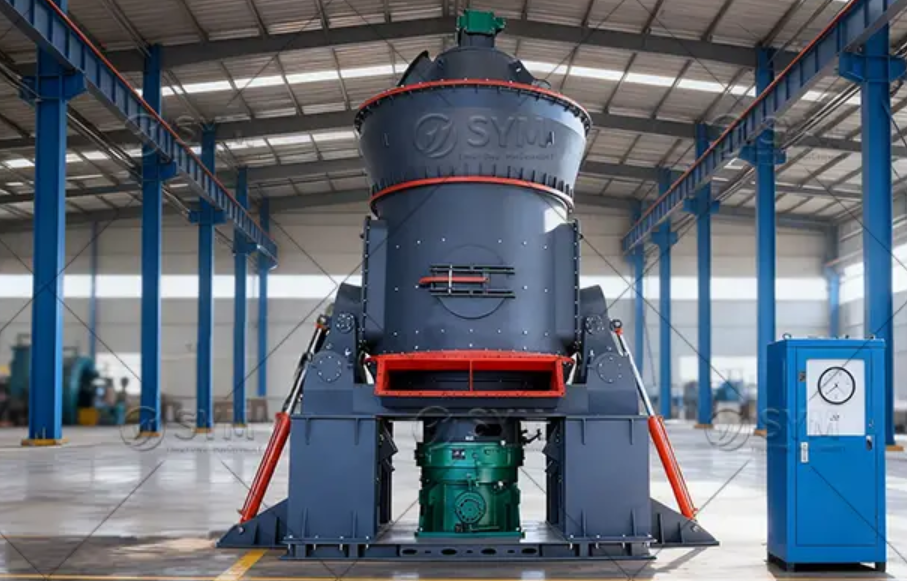
A Vertical Roller Mill uses grinding rollers that press material against a rotating grinding table. Instead of relying primarily on impact and collision, this technology applies pressure to grind clinker efficiently while simultaneously drying and separating the material within a single integrated system.
The Vertical Roller Mill has become increasingly popular because it combines multiple production processes into one compact machine. Grinding, drying, classification, and material transportation occur simultaneously, reducing the need for additional equipment and simplifying plant layouts.
Modern automation systems also allow the Vertical Roller Mill to maintain stable operating conditions while continuously optimizing grinding performance.
Energy Efficiency Comparison
Energy efficiency is one of the most significant differences between a Ball Mill and a Vertical Roller Mill. Cement grinding represents one of the largest electricity expenses in cement manufacturing, making energy savings a major factor when selecting equipment.
A Vertical Roller Mill typically requires considerably less electrical power because of its efficient grinding mechanism and integrated material classification system. Lower energy consumption translates directly into reduced operating costs, particularly for high-capacity cement plants operating around the clock.
A Ball Mill, while highly reliable, usually requires more energy to achieve the same production output. However, for smaller facilities or plants with existing infrastructure, the additional energy cost may be offset by lower capital investment and easier maintenance.
Cementl frequently highlights energy-efficient grinding technologies because reducing power consumption helps manufacturers improve profitability while meeting sustainability objectives.
See also: next level business network
Product Quality and Grinding Performance
Both the Ball Mill and the Vertical Roller Mill are capable of producing high-quality cement, but they achieve this in different ways.
A Ball Mill produces a broad particle size distribution that can enhance certain cement performance characteristics, making it suitable for various cement formulations. It also offers excellent flexibility when processing different raw materials and additives.
A Vertical Roller Mill, on the other hand, provides precise particle size control through its integrated separator. This allows manufacturers to produce highly consistent cement while maintaining stable product quality throughout continuous operation.
The choice ultimately depends on the specific cement products being manufactured and the quality requirements of the target market.
Maintenance and Operational Reliability
Maintenance is another important factor when comparing grinding technologies. A Ball Mill features a relatively straightforward mechanical design, making maintenance procedures familiar to most cement plant operators. Routine servicing is generally predictable, and replacement components are readily available.
A Vertical Roller Mill incorporates more advanced mechanical and hydraulic systems, requiring specialized technical knowledge during maintenance. However, modern designs have significantly improved equipment reliability, reducing downtime and extending component lifespan.
When properly maintained, both systems deliver dependable long-term performance. Cementl encourages manufacturers to evaluate not only maintenance complexity but also total lifecycle costs when selecting grinding equipment.
Space Requirements and Plant Design
Plant layout is another area where the Vertical Roller Mill offers a noticeable advantage. Its compact design combines several production functions into one integrated unit, reducing the amount of floor space required for installation.
A Ball Mill system often requires additional auxiliary equipment such as separators, elevators, conveyors, and dust collection systems, resulting in a larger overall plant footprint.
For new cement plants where space optimization is important, the compact nature of a Vertical Roller Mill can simplify engineering design and reduce construction costs.
Which Option Is Better for Your Cement Plant?
There is no universal answer when comparing a Ball Mill with a Vertical Roller Mill because every manufacturing facility has unique operational requirements.
Manufacturers seeking maximum energy efficiency, higher production capacity, and advanced automation often prefer the Vertical Roller Mill. Its lower power consumption and integrated grinding system make it an excellent choice for modern large-scale cement plants.
Meanwhile, businesses prioritizing operational simplicity, proven reliability, and lower initial investment may continue to find the Ball Mill an attractive solution. Its flexibility and long history of successful operation make it particularly suitable for upgrades, smaller facilities, and plants with existing grinding infrastructure.
With technical expertise and innovative industrial solutions, Cementl helps manufacturers evaluate both technologies based on production goals, operational budgets, and long-term business strategies.
Conclusion
Both the Ball Mill and the Vertical Roller Mill remain highly effective solutions for cement grinding, each offering distinct advantages depending on production requirements. While the Ball Mill continues to provide reliable performance, operational flexibility, and straightforward maintenance, the Vertical Roller Mill stands out for its superior energy efficiency, compact design, advanced automation, and lower long-term operating costs.
As cement manufacturers focus on improving productivity while reducing environmental impact, selecting the right grinding technology becomes increasingly important. By carefully evaluating production capacity, energy consumption, maintenance requirements, and future expansion plans, businesses can choose the solution that best supports their long-term objectives. With expert guidance and advanced industrial technologies from Cementl, manufacturers can confidently invest in grinding systems that deliver consistent quality, sustainable performance, and lasting profitability.